Why Leading Enterprises
Choose ionite
Ionite goes beyond traditional integration or compliance tools delivering both in one agile, automation-first platform built for modern enterprises.
Legacy Tools Weren't
Built for Speed, Flexibility,
or Compliance
Most enterprise stacks were assembled over time, and legacy tools reflect that.
Integration-only platforms (like Mulesoft and Boomi) connect systems but don't provide compliance oversight. Meanwhile, governance platforms manage policy and reporting, but don't handle technical integration.
As a result, teams rely on custom code, consultants, and brittle workflows to bridge the gap.
A New Standard:
Integration + Compliance, Combined
Ionite changes the operating model.
Integration automation with continuous compliance in the same engine
"Standards-as-Code" that codify governance, not just document it
Security-first architecture designed to prevent gaps, not react to them
Industry-agnostic platform with compliance built into the core
Security That Moves at the Speed of Development
Traditional governance slows teams down because controls are applied after systems are built. Ionite embeds enterprise security and compliance directly into the integration and development lifecycle, so teams move faster without introducing risk.
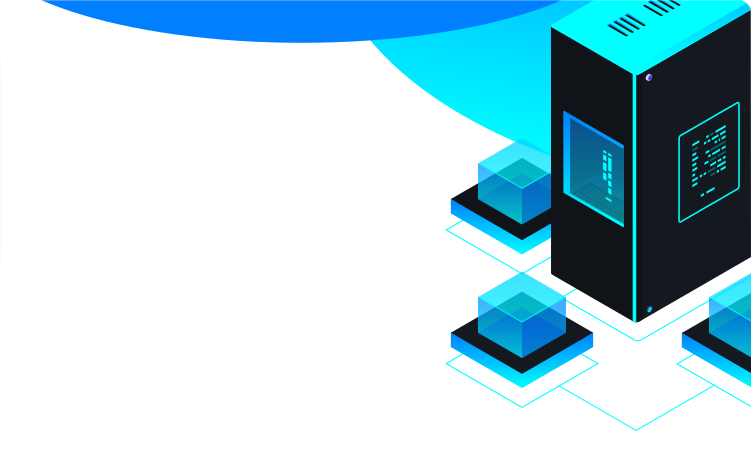
Credential vaulting
by default
Secrets and credentials are securely managed through centralized vault integrations instead of hard-coded or manually distributed access keys.

Security enforced
in the pipeline
Enterprise standards validate integrations during deployment, preventing misconfigurations before they reach production.
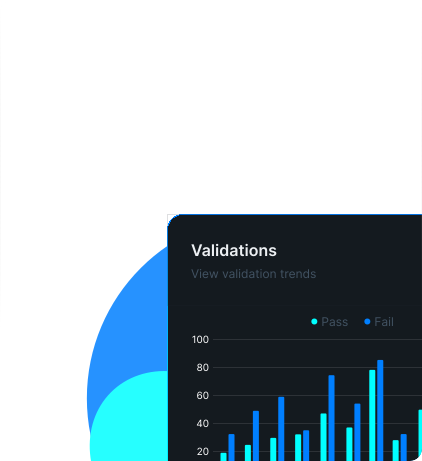
Continuous
protection
Continuous validations ensure integrations remain compliant as environments evolve.
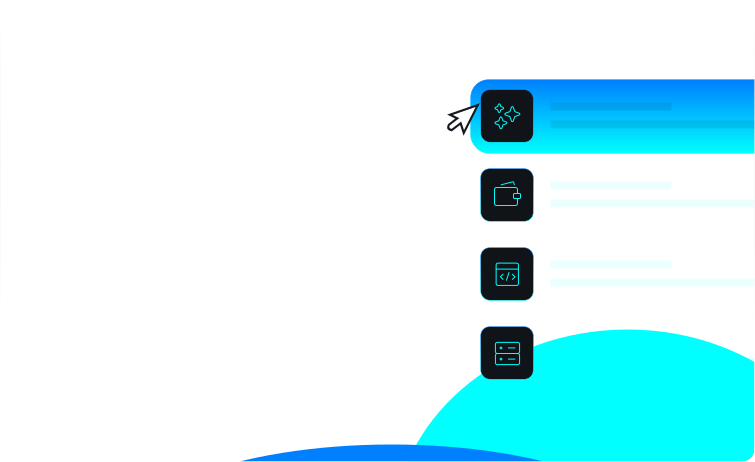
Switch vendors without
restarting governance
Move from one vendor to another by simply turning one switch off and another on. Ionite immediately applies the same enterprise standards to the new integration, leaving only the data migration.
With Ionite, security isn't a checkpoint at the end of development. It's built into the system from the start.
How Ionite Compares
Enterprise teams often rely on multiple platforms to manage integrations, governance, and developer workflows. While these tools solve parts of the problem, they leave critical gaps between integration and compliance.
Integration Platforms
Examples: MuleSoft, Boomi
Connect applications and automate data flows
Focus on system connectivity and orchestration
Security and compliance validation typically happen outside the integration workflow
Developer Platforms
Examples: Backstage
Provide a developer portal for managing internal services
Improve visibility and developer experience
Do not enforce enterprise standards or integration governance
Governance and Compliance Platforms
Examples: Archer, ServiceNow GRC
Track policies, risk, and regulatory requirements
Provide reporting and oversight for compliance programs
Do not integrate applications or enforce controls during deployment
Integration and compliance combined in a single platform
"Standards-as-Code" that automatically enforce enterprise requirements
Governance embedded directly into integrations and development workflows
Continuous validation across SaaS, internal applications, and AI systems
Designed for the Most Complex
Enterprise Environments
Enterprise environments are never simple. ionite is built for scale, and speed - supporting SaaS, internal applications, and AI systems as stacks evolve. A strong fit for regulated, fast-growth technology teams, and M&A heavy organizations.